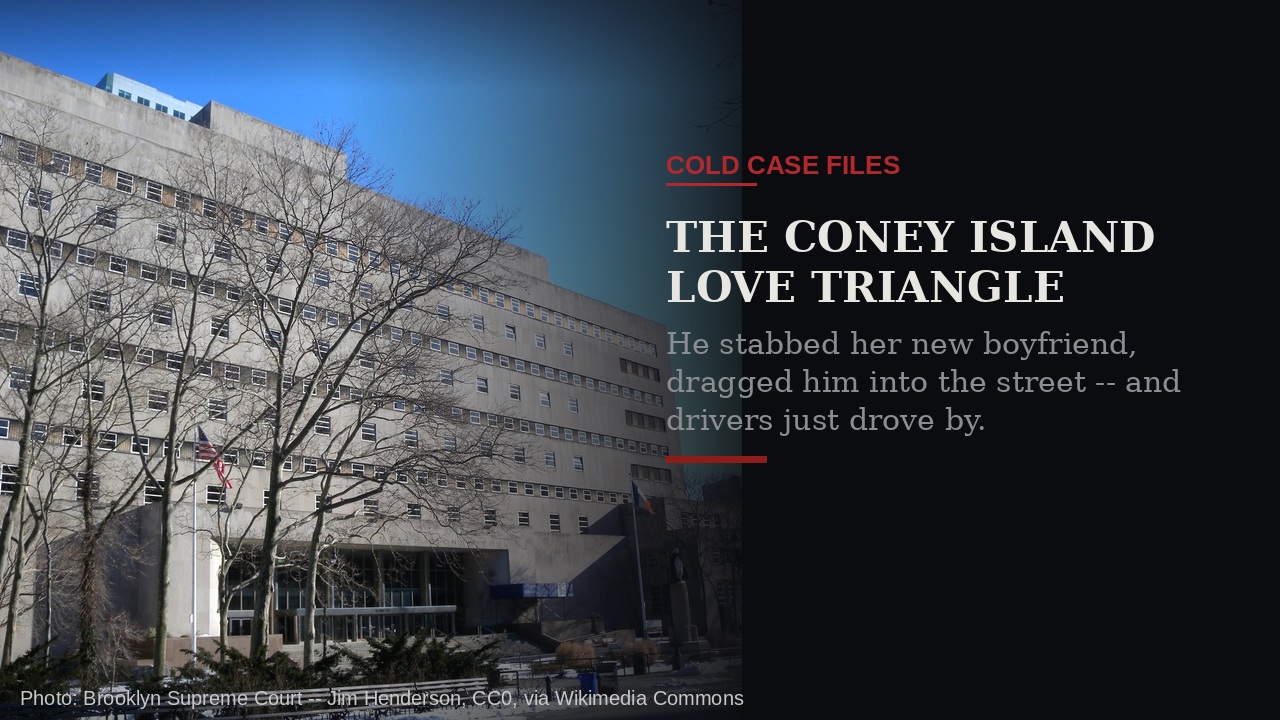
In the early hours of January 12, 2020, Michael Israel broke into his ex-girlfriend’s Coney Island home, where she was with her new boyfriend, 42-year-old James Santiago. He beat her, stabbed Santiago seven times, and dragged his body into the street — where witnesses say passing drivers saw him trying to flag them down and kept driving. Santiago died at the hospital hours later.
The case traced back through a documented history between Israel and his ex, Jennifer Ortiz, including threatening texts and a FaceTime call hours before the attack. NYPD’s 60th Precinct investigated, drawing on Israel’s prior violent record and the $100,000 bond Ortiz herself had posted for him months earlier. Digital evidence — the texts, the FaceTime call, and work from the department’s Digital Evidence Lab — anchored the prosecution’s case over what became a six-year road to trial.
On June 26, 2026, Michael Israel was convicted of first-degree murder, first-degree burglary, third-degree assault, and endangering the welfare of a child. On September 29, 2026, Justice Michael Kitsis sentenced him to life in prison without parole.
The case also echoes the 1964 Kitty Genovese case just a few miles away in Kew Gardens — the one that gave psychologists the term “bystander effect.” Santiago’s case wasn’t a crowd of witnesses; it was a string of individual drivers, each alone, each making the same choice not to stop.
Watch the full case:
Sourcing & Credits
- Brooklyn District Attorney’s Office press release, September 29, 2026 — case facts, quotes, and sentencing details.
- Hoodline, News12 Brooklyn, amNY (including the original 2020 arrest report), bronx.com, and ABC7 New York — investigative background, timeline, and the 2005/2014/2019 prior-record history.
- Opening/recurring courthouse image: Brooklyn Supreme Court, Kings County. Photo: Jim Henderson, CC0, via Wikimedia Commons.
- NYPD 60th Precinct (Coney Island) exterior: Photo: Jim Henderson, CC BY-SA 3.0, via Wikimedia Commons.
- Kitty Genovese / bystander-effect historical context: widely documented public history of the 1964 case and subsequent social-psychology research, presented with the standard caveat that later research complicated the original account.
- Illustrative b-roll (handcuffs, prison, police cruiser, gavel): stock reused from earlier episodes in this series, refitted to 1920×1080. No crime-scene or graphic imagery was used in this video.
No clean, directly-sourceable identification photo of Michael Israel or James Santiago was found during sourcing for this video.
Related reading: No well-reviewed book has been written about this specific case. For background on intimate partner violence, stalking, and the bystander effect: related true crime books on Amazon.
As an Amazon Associate I earn from qualifying purchases.
Leave a Reply